Ready when the room changes
Create an occasional sleeping surface for a guest room, a flexible living area or a temporary rest space. Start with how the mattress will be used and where it will be stored.
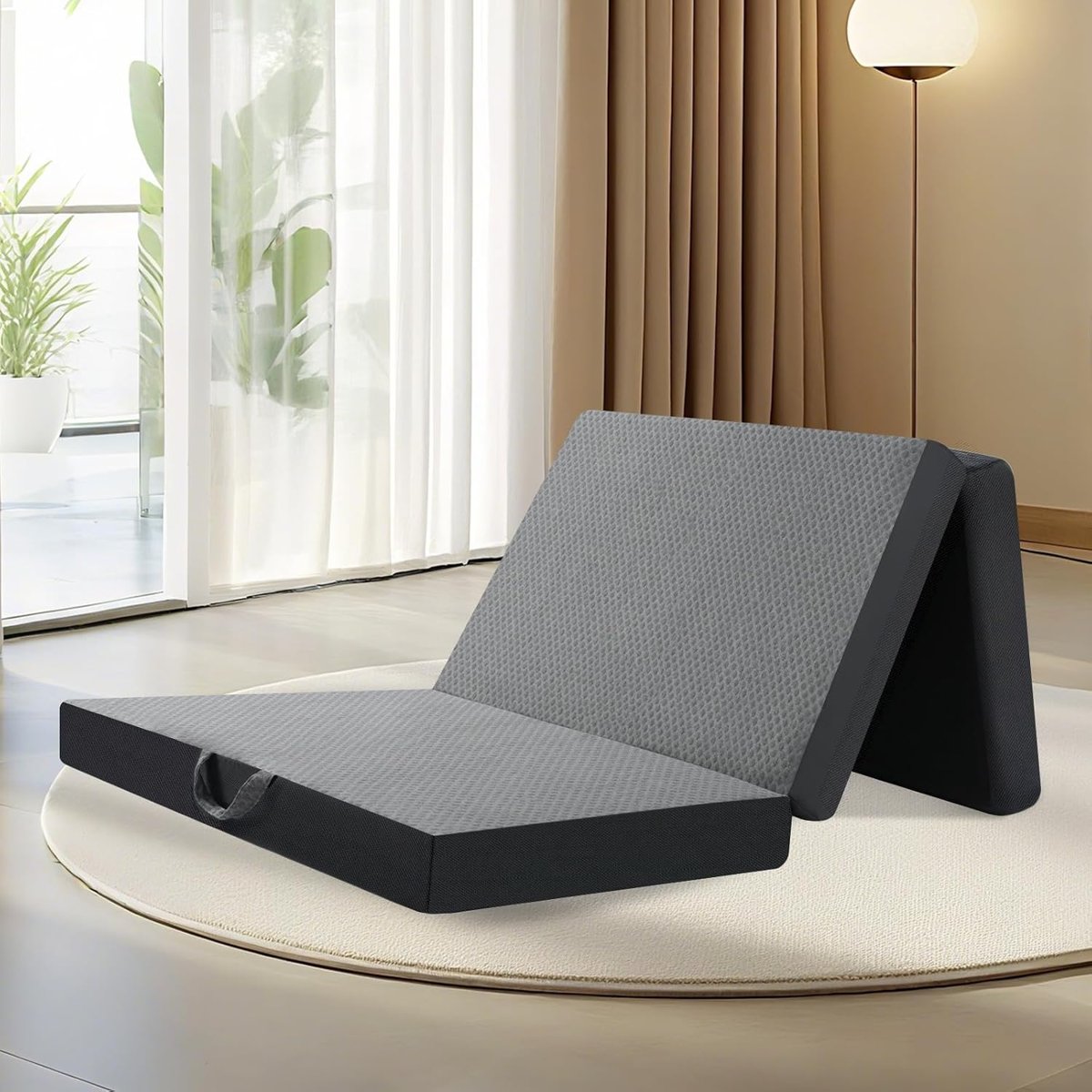
A three-panel foam mattress that folds into a compact stack, with tailored fabric sections and a defined fold layout.
Request a quote for this product ↗Guangrao Lianxin Trading Co., Ltd.
In-house design · Fabric sourcing · Sewing teams
A three-panel foam mattress opens into a flat resting surface and folds into a compact stack when it is time to put it away. Develop a guest-bed, floor-rest or travel collection around the right dimensions, foam feel and textile finish.
Create an occasional sleeping surface for a guest room, a flexible living area or a temporary rest space. Start with how the mattress will be used and where it will be stored.
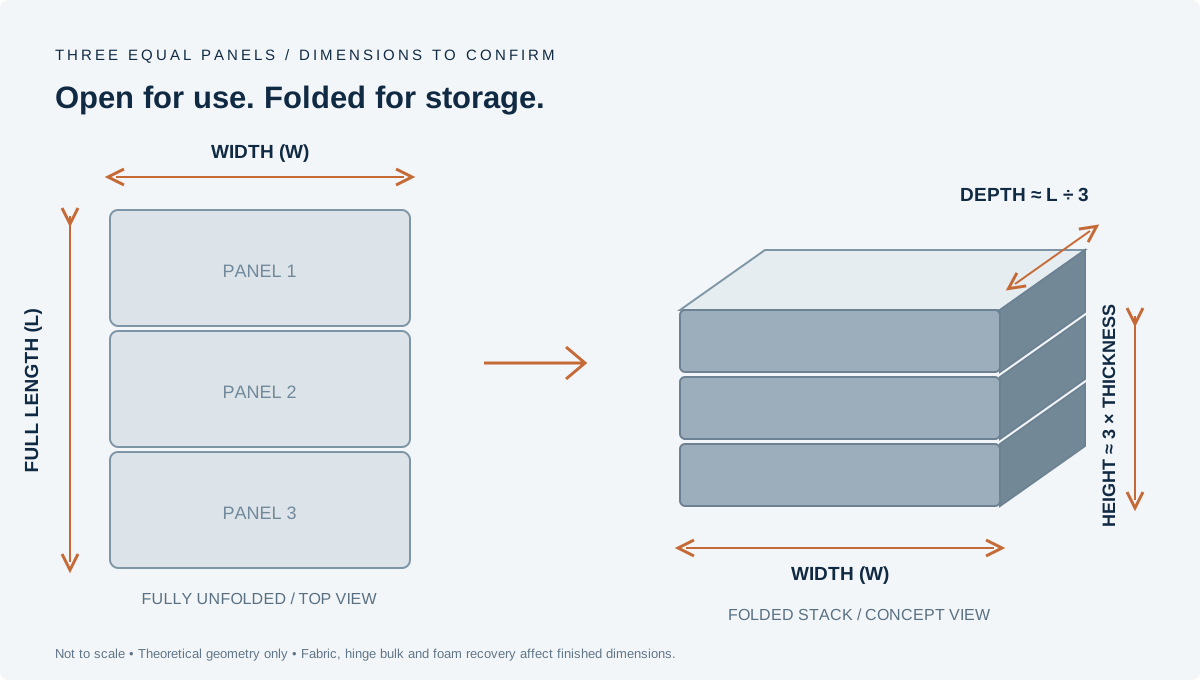
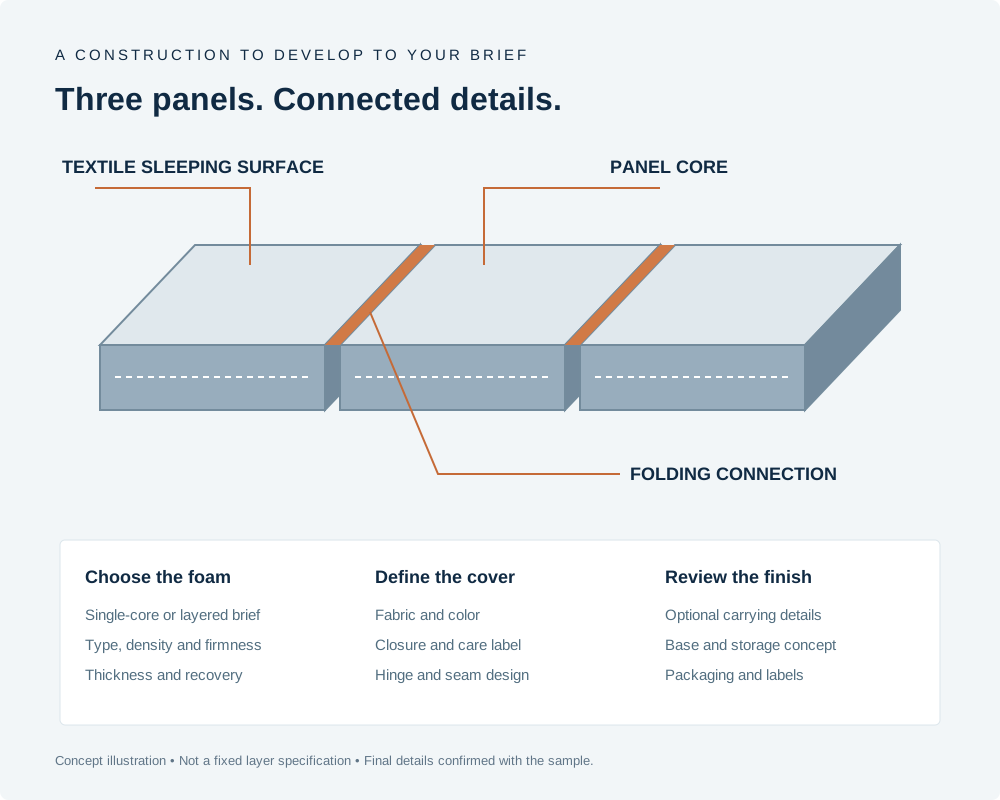
Coordinate the three foam sections, fabric hinges and cover seams so the panels open and stack in the intended direction.
Discuss a single foam core or a layered construction. Thickness, firmness and foam type work together; review a sample on the intended supporting surface.
Bring the fabric, color, zip arrangement, carrying details and packaging into one specification for quotation and sample approval.
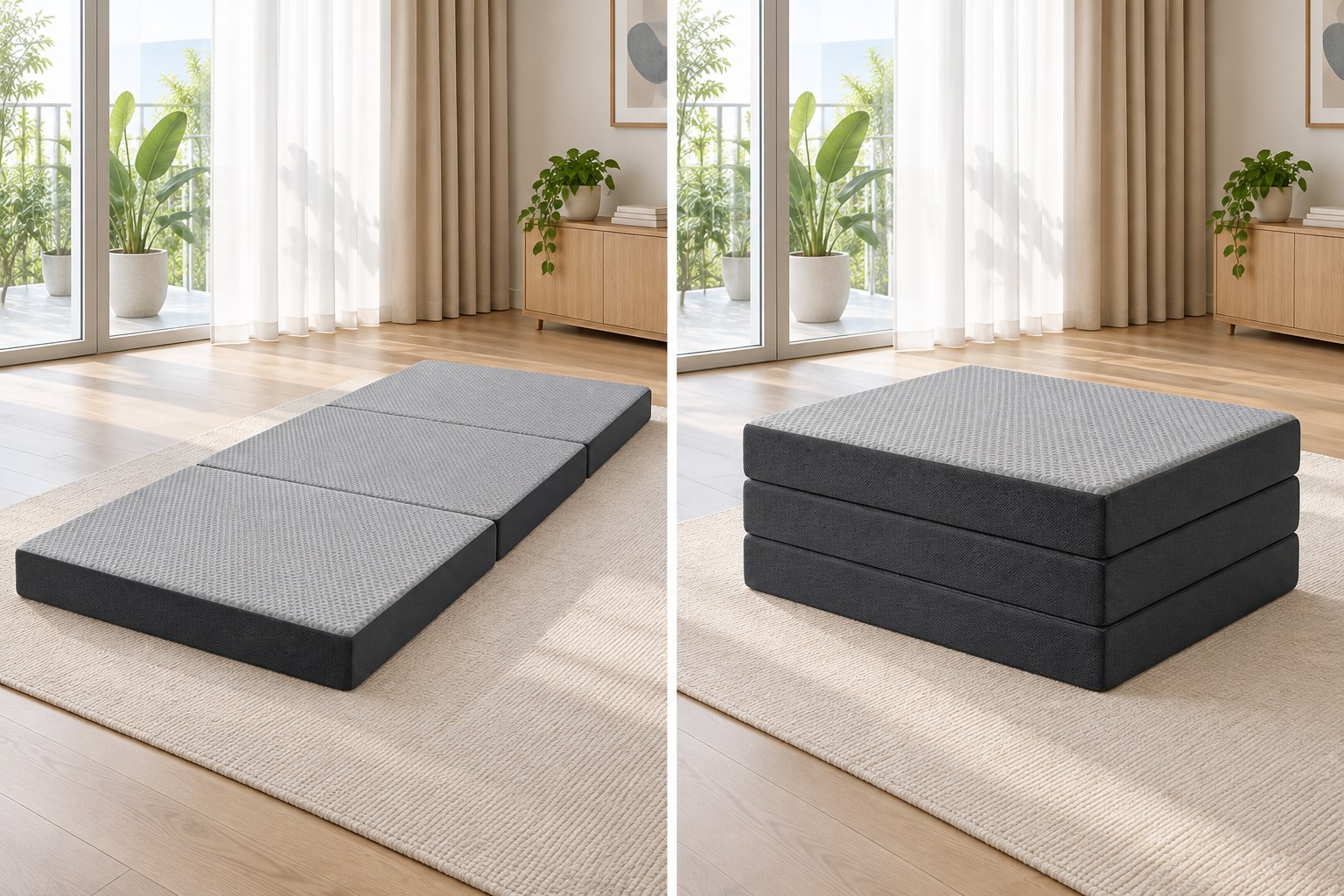
Unfold all three sections to make a full-length resting surface. When not in use, fold the panels into a stack for a planned storage space. A handle or a separate bag can be reviewed if your brief calls for a carrying solution.
The folding pattern matters as much as the open dimensions. Equal panels make a simple stack; a different panel layout changes the footprint, hinge position and cover pattern.
The partially folded arrangement in the reference image is a styling concept. Any use as a seat or backrest must be reviewed and confirmed for the final construction.
Develop your folding mattress ↗Use these formats to prepare an enquiry. They are reference dimensions, not a live stock or availability list. Specify width × length × thickness, then confirm the actual finished and folded dimensions with the sample.
| Reference format | Open width × length | Approx. metric | Folded width × depth* |
|---|---|---|---|
| Narrow single | 30 × 75 in | 76.2 × 190.5 cm | 30 × 25.0 in |
| Twin | 38 × 75 in | 96.5 × 190.5 cm | 38 × 25.0 in |
| Twin XL | 38 × 80 in | 96.5 × 203.2 cm | 38 × 26.7 in |
| Full / Double | 54 × 75 in | 137.2 × 190.5 cm | 54 × 25.0 in |
| Queen | 60 × 80 in | 152.4 × 203.2 cm | 60 × 26.7 in |
| King | 76 × 80 in | 193.0 × 203.2 cm | 76 × 26.7 in |
| Custom | Send width, length, thickness, panel layout and the storage space available. | ||
*Calculated footprint = width × one-third of the open length, assuming three equal panels. Fabric, hinges, foam recovery and manufacturing tolerances affect actual folded measurements. This is not a carton-size guarantee.
Example enquiry sizes: 90 × 190 cm · 90 × 200 cm · 120 × 200 cm · 140 × 200 cm · 150 × 200 cm · 160 × 200 cm · 180 × 200 cm. Custom lengths, widths and panel proportions can be reviewed. Confirm the dimensions directly rather than relying only on a market size name.
| Open foam thickness | Metric equivalent | Theoretical 3-panel stack height | What to check |
|---|---|---|---|
| 3 in | 7.62 cm | 9 in / 22.86 cm | Surface feel and the available storage height. |
| 4 in | 10.16 cm | 12 in / 30.48 cm | Panel handling, cover fit and overall stack volume. |
| 6 in | 15.24 cm | 18 in / 45.72 cm | Carrying weight, hinge design and a deeper folded stack. |
| Custom | Specify thickness | Approximately 3 × thickness | Confirm whether the stated thickness includes the cover. |
A single-core design and a comfort-layer/support-core design can be reviewed as different project options. If a memory-foam surface is required, specify the intended response and feel. Density, firmness, layer thickness and any bonding method are agreed after material and sample review.
Discuss the sleeping-surface fabric, side panels, seams, zip placement and hinge connections. A removable cover can be reviewed alongside the washing instructions and the way the three sections are assembled.
If an anti-slip base, handle, strap or carry bag is required, include it in the brief. Grip, handle strength, finished weight and durability must be checked for the actual size and construction.
Material certifications, cooling features and performance claims require supporting documentation for the agreed specification. The reference images do not establish certification or a fixed foam composition.
Plan the sleeping surface and the space needed to unfold it. Check comfort on the intended floor or supporting base, and define how often the product will be opened and stored.
Work from the actual usable area and storage opening. Irregular shapes, short lengths or a carrying bag need a clear drawing and a separate packing review.
Develop a folding floor-rest product with colors, textiles and labels that fit your collection. Confirm any additional seating configuration through design and sample review.
Open packaging carefully without cutting the fabric or foam. If compression packaging is agreed, follow the product-specific recovery instructions before measuring or assessing the feel. Recovery time is confirmed for the selected materials and packing method.
Open the panels flat on a clean, dry, even surface. Align the connecting sections and check that the setup suits the intended use. Keep foam and textiles away from flames and direct heat.
Cleaning instructions depend on the fabric and core. Do not assume the foam or cover is machine washable. Dry the product fully before folding or storing it, and avoid prolonged moisture exposure.
Our design, fabric-sourcing and sewing teams can review the foam sections and cover patterns as one product. Bring a reference, drawing or size list, then agree the sample before production.
Flat or compressed packing can be reviewed for the final construction. Carton dimensions, shipping weight, recovery and compression limits are confirmed after a packing trial. Minimum order quantities, sample costs and lead times are quoted by project.
Three connected panels fold over one another to form a stack. The panel proportions and fabric hinge positions determine the final folded shape. Approve both the open layout and the folded sample before production.
No. The tables are reference sizes for custom enquiries. Confirm the actual finished width, length, thickness, panel layout and tolerance with your quotation. Metric and US size names are not interchangeable.
A layered construction can be reviewed. Specify the desired feel, total thickness and layer arrangement, then compare samples. Foam formulation, density, firmness and bonding details must be confirmed for the final design.
A removable zip cover can be included in the design brief. Washability, temperature, drying method and shrinkage allowance depend on the fabric and construction. Follow the approved care label; do not wash the foam core unless the final instructions expressly allow it.
Include handle position, carrying method, bag dimensions and closure requirements in your brief. Finished weight and handling strength are verified for the approved size and material; they are not fixed by the reference image.
We can review a travel or guest-bed specification around your dimensions. Check the usable floor area, storage opening and intended environment. A textile-covered foam mattress is not automatically waterproof or suitable for wet outdoor ground.
Send the quantity by size, materials, packaging and destination. We confirm sample arrangements, minimum quantities, production timing and pricing after reviewing the specification.
Our design team develops the product details, our purchasing team sources fabrics, and our sewing workforce brings the agreed construction together. Review a sample and confirm the final specification before production.
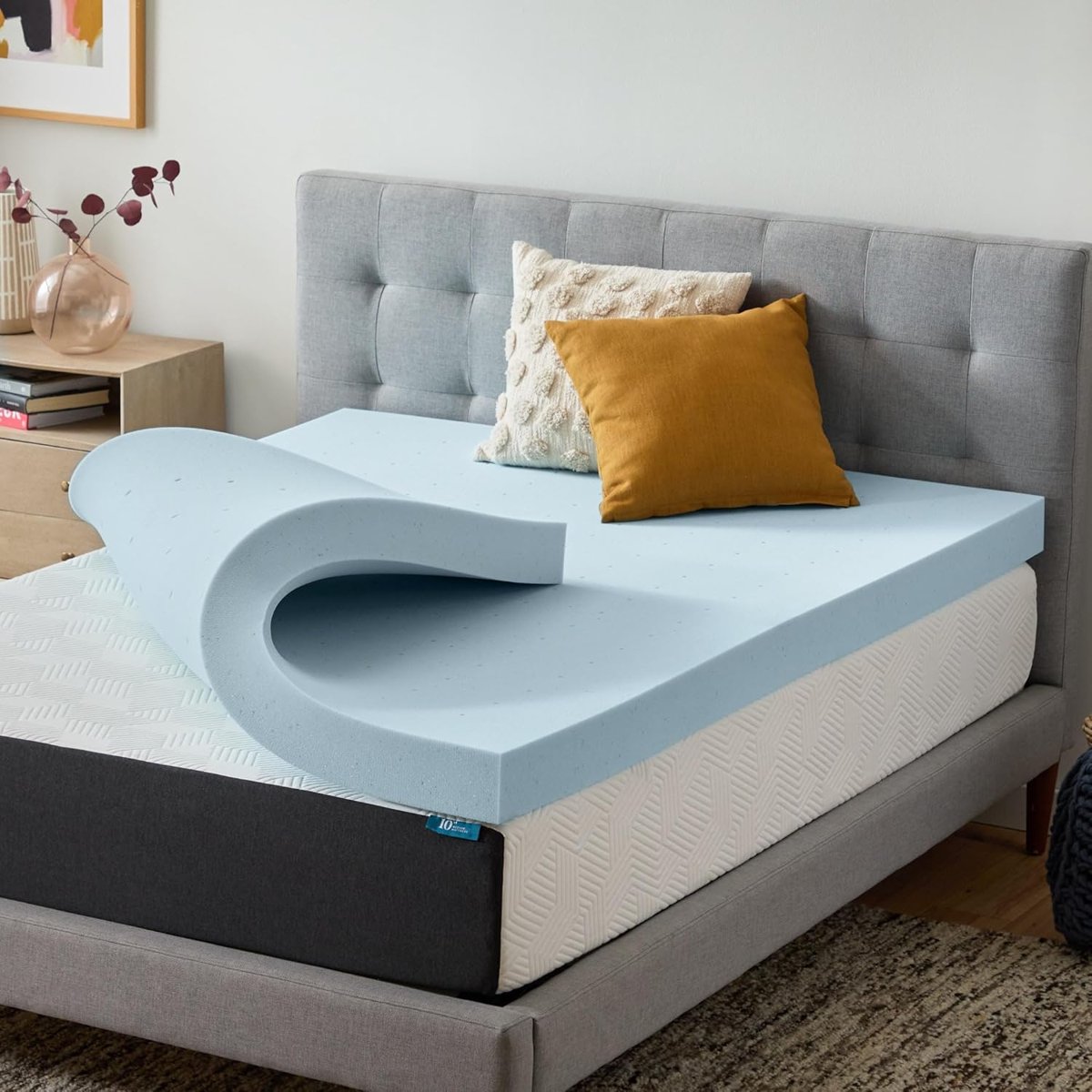
A slim foam layer designed to sit above an existing mattress, with thickness and cover options defined by your brief.
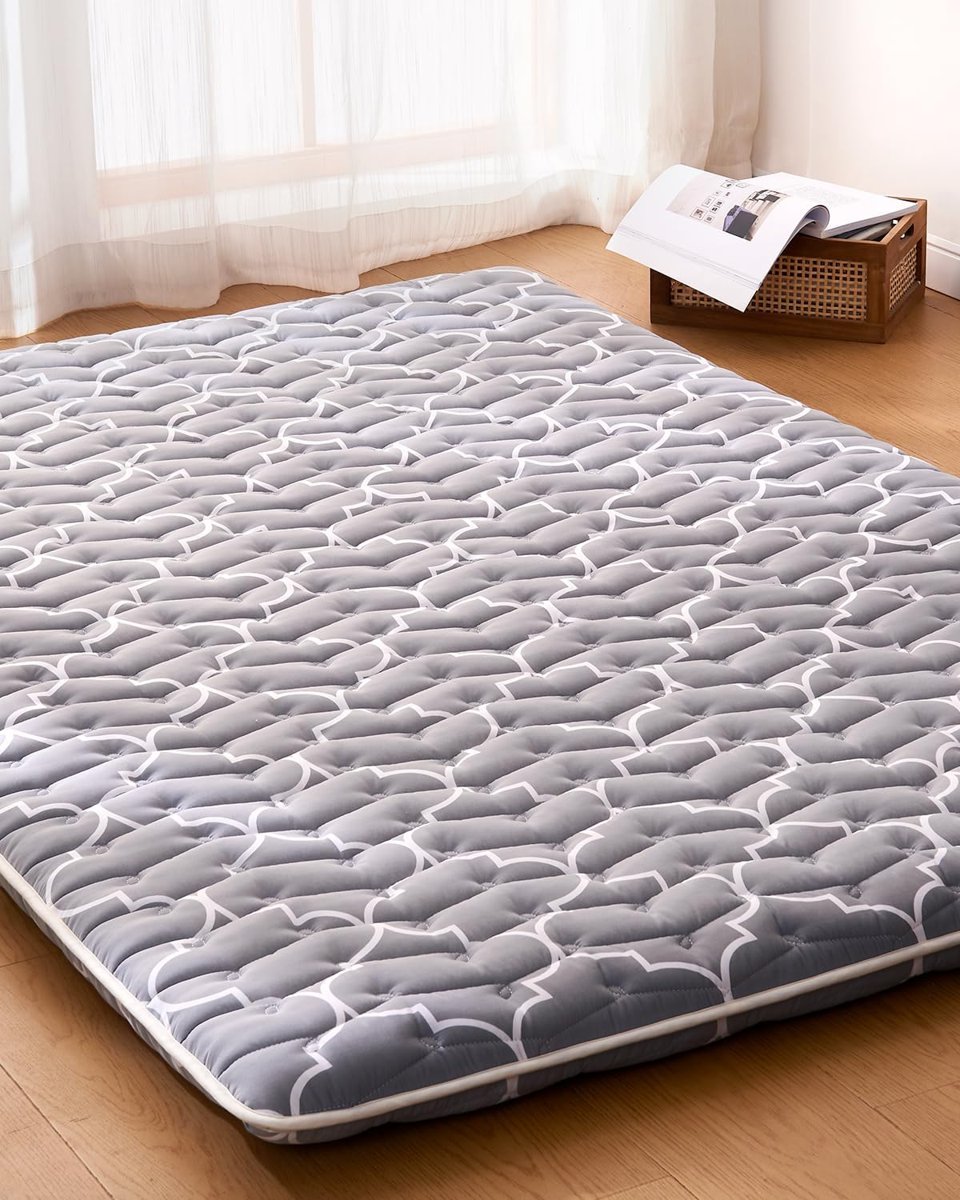
A low-profile foam floor mattress inspired by Japanese-style floor bedding, made around your preferred dimensions and construction.